S/D = Steady & Determined
From LifeLift Assessment A = The DISC Profile
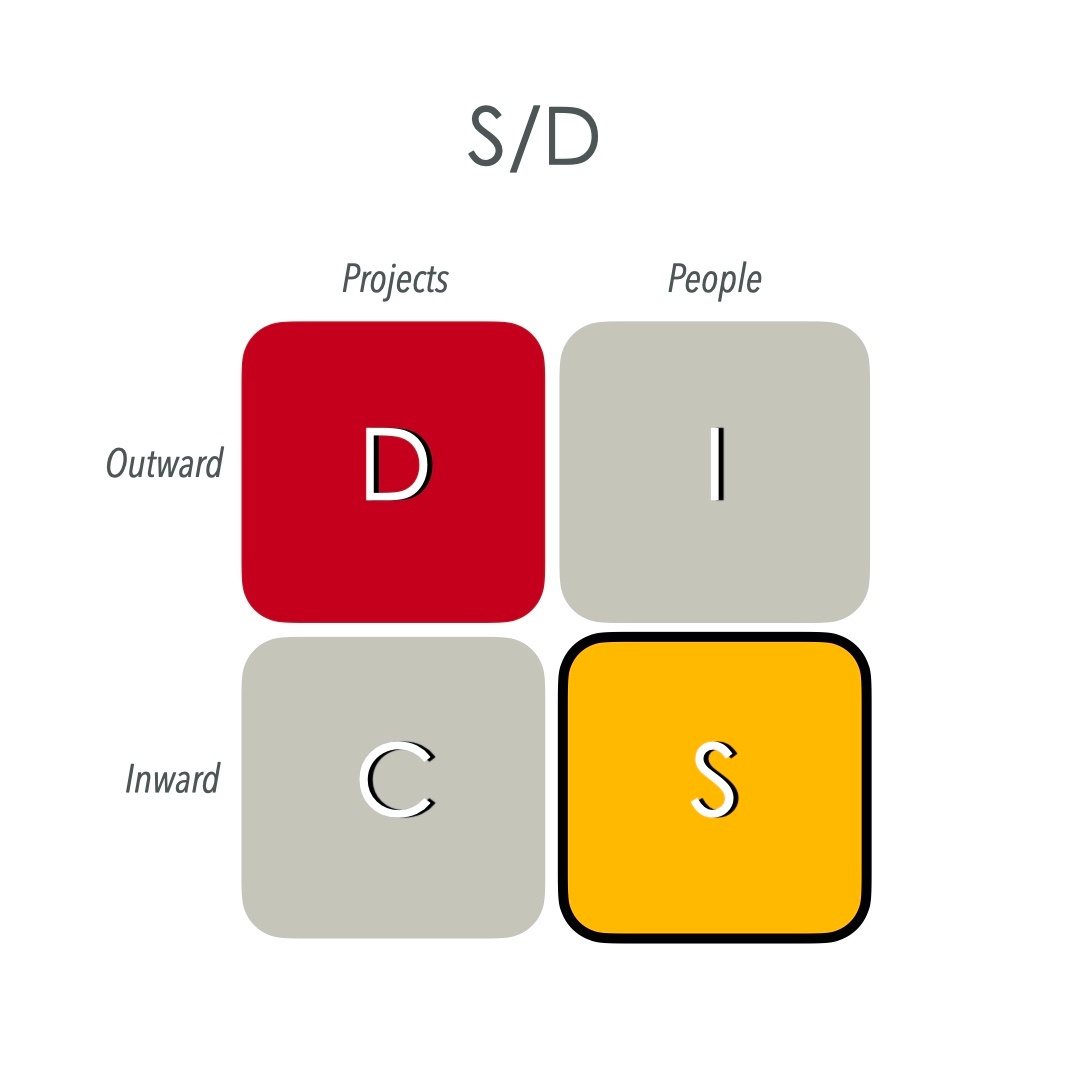
Inward, works well with people and can get projects done
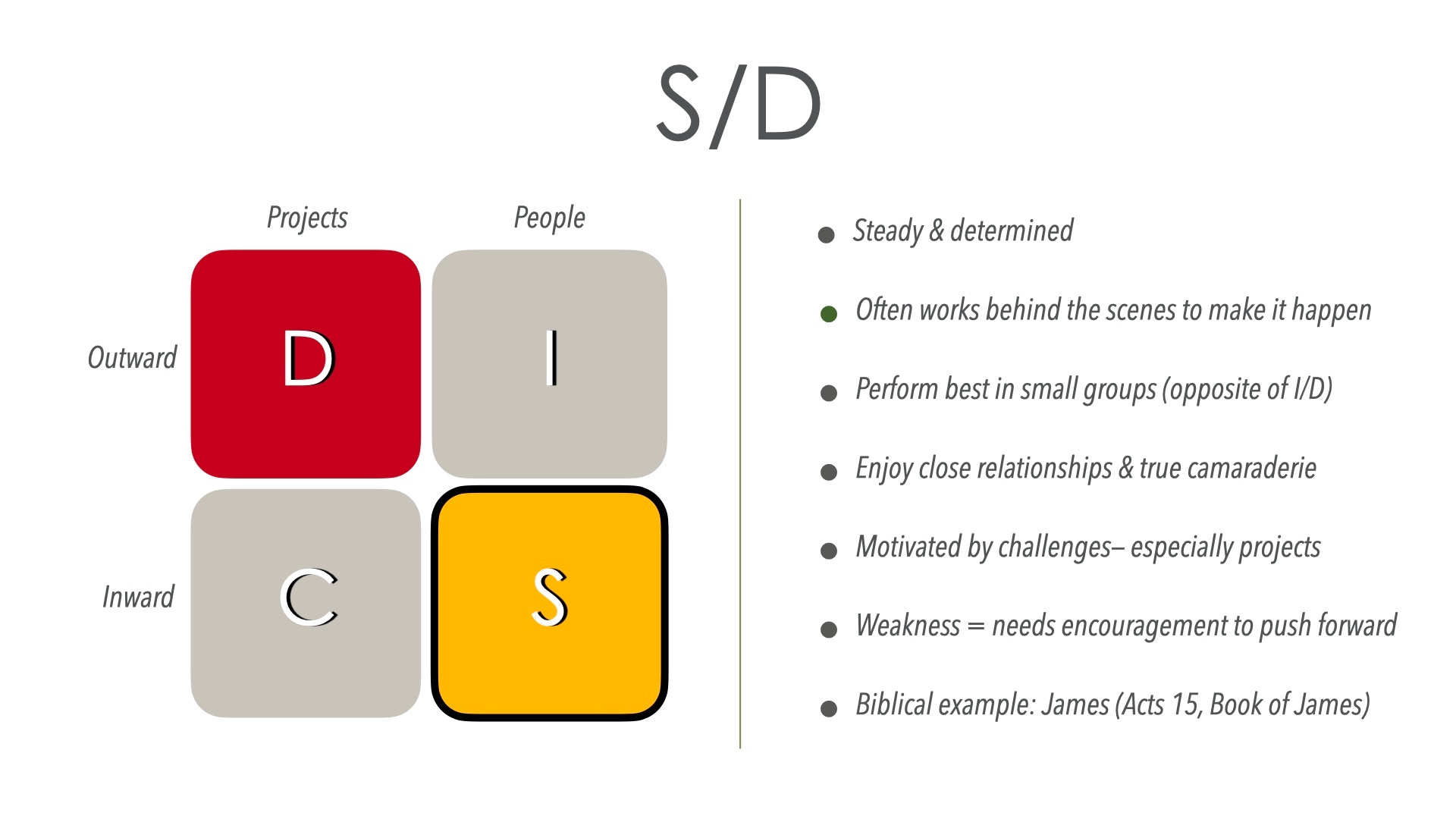
S/D (yellow / red) are generally quiet, steady, composed people who get the job done. They tend to be inward facing (read: introvert), such that they truly connect with individuals, yet they have the capacity to rise to the occasion when there’s a large need (because of the D side).
They perform better in small groups and do not enjoy speaking in front of crowds.
Though they can be soft- and hard-hearted at the same time, they enjoy close relationships with people, being careful not to dominate them.
Challenges motivate them, especially ones that allow them to take a systematic approach. Because this personality style tends to be determined, persevering through time and struggles, they benefit from encouragement and positive relationships.
Let’s summarize:
- Steady and determined, focuses on each individual person but can create big movement towards a project or goal
- Often works behind the scenes— by empowering individuals— rather than leading from the front (contrast with I/D)
- Performs best in small groups (again, opposite of I/D)
- Enjoys relationships and true camaraderie
- Is motivated by projects
- Weakness = may need encouragement to push forward
Biblical example
James (see James 5:11, Acts 15). James is the apostle who makes one of the most pivotal decisions in Church history. The leaders of the church gathered from across the known world to determine if Gentile delivers needed to be circumcised in order to become Christian. At stake was 1000s of years of salvation history and dogma— as well as the future of the Church.
James heard everyone and then made a confident decision that moved the Church forward, deciding that men only needed to abstain from strangled meat, blood, and be faithful to their wives.
In his book, he also boils Christianity down to the basics— with a keen focus on relationships and considering the needs of others around you.