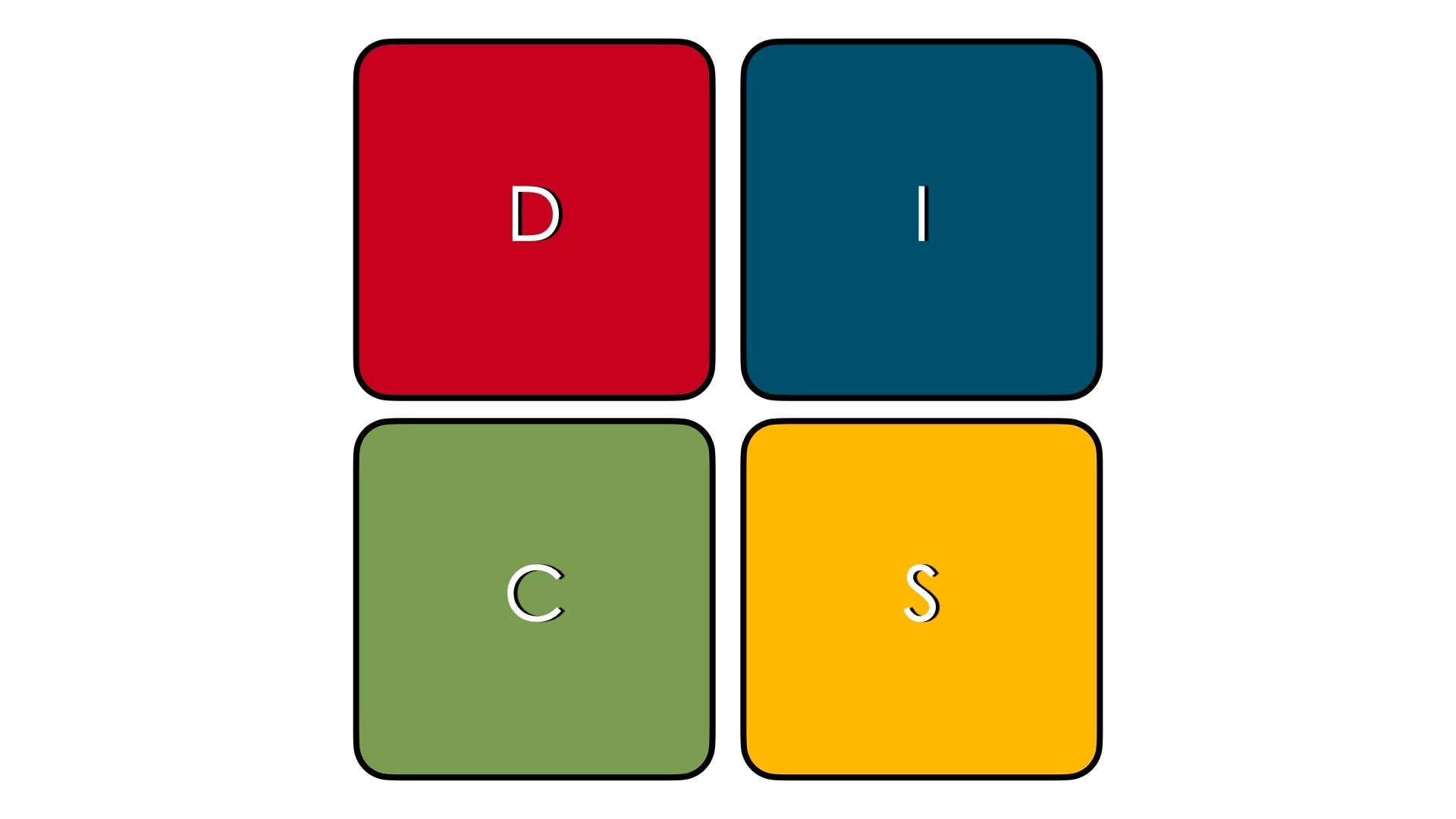
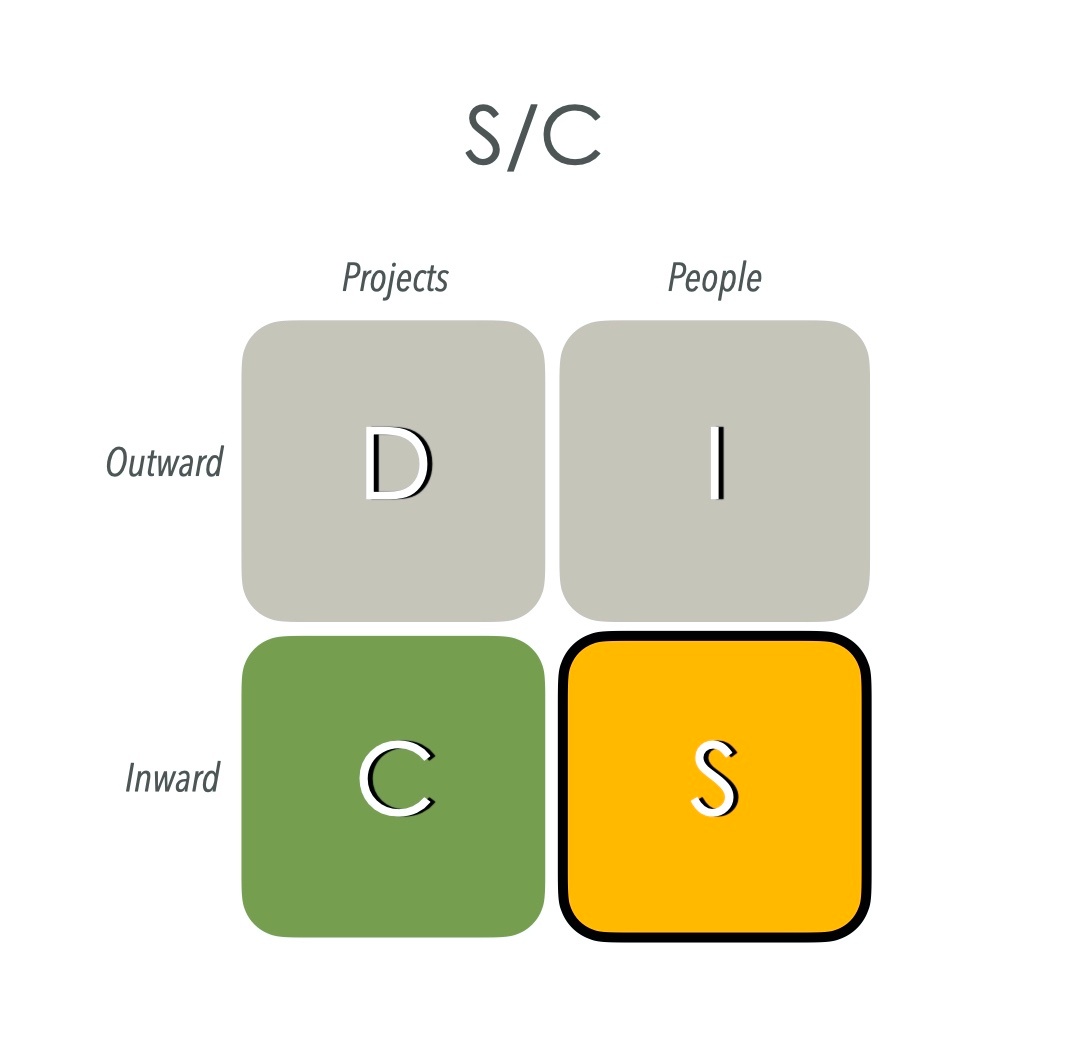
S/C = Steady + Contemplative
From LifeLift Assessment A = The DISC Profile
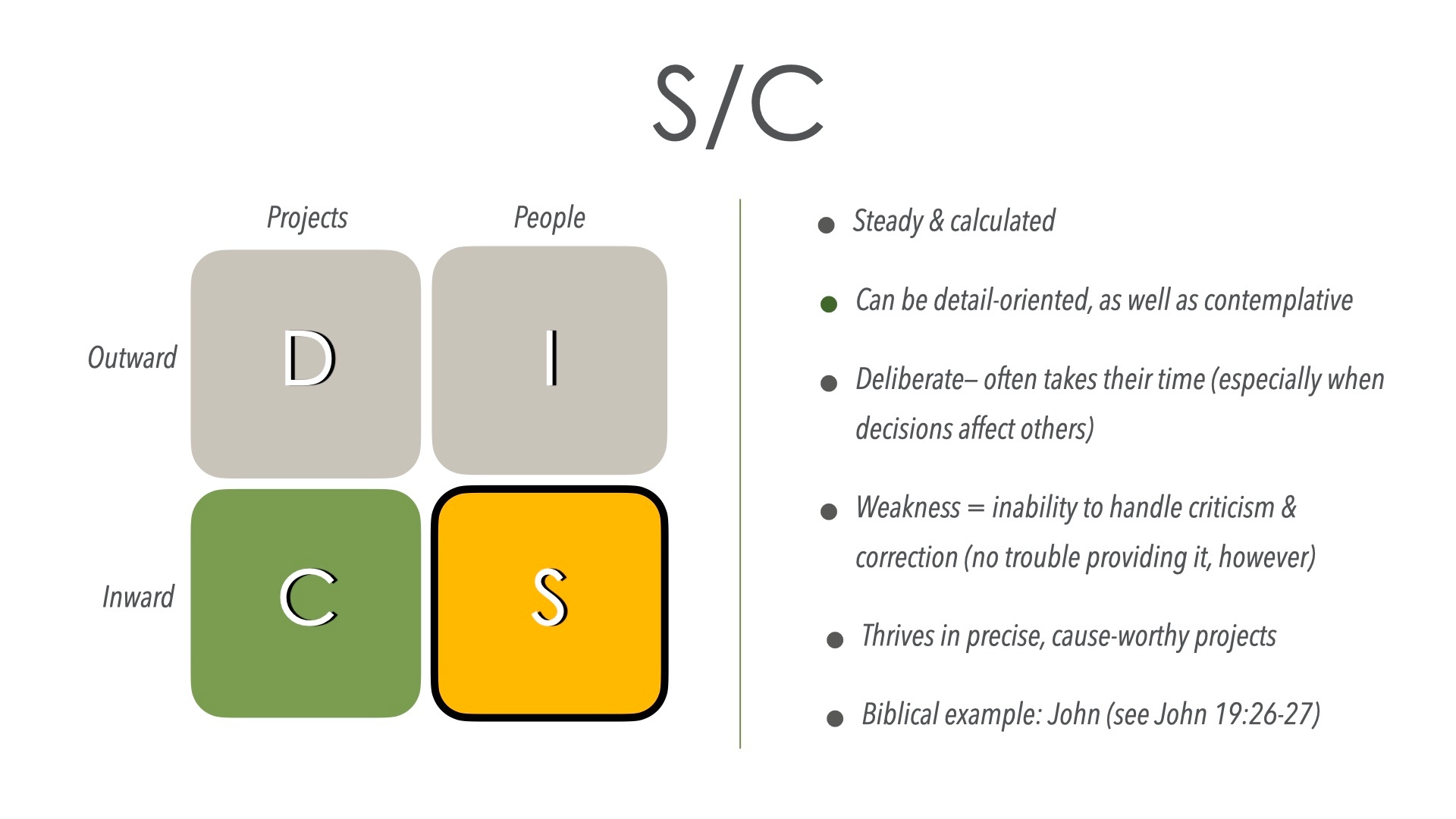
SCs are diplomatic and steady (the S, yellow-side), as well as detail-oriented (C, green). They tend to be introverted, as they fall totally on the “bottom” of our chart.
Stable and contemplative, they like to weigh the evidence and discover the facts to come to a logical conclusion. More deliberate than the “top” of the chart, they prefer to take their time, especially when the decision involves others.
Possible weaknesses include being highly sensitive and unable to handle criticism, and they also need to be aware of the way they treat others.
Operating best in precise and cause-worthy projects, the SC can be a peacemaker, making them a loyal team member and friend.
Let’s summarize:
- Steady and calculated, these leaders connect well with others in small groups and can see structure and patterns.
- They can be detail-oriented and contemplative
- They are deliberate and do things with great intention
- Weakness = inability to handle criticism (they can “dish it out,” however, they just can’t take it)
- Thrive in precise, cause-worthy projects
Biblical example
John (see the Gospel of John, especially John 19:26-27), the discus who was arguably Jesus’ best friend.
He wrote a detailed, orderly account of Jesus’ life, structured around the signs and wonders Jesus did— rather than a chronology of His ministry (like the other three Gospels did). He was intentional in His approach, penning the specific stories that would enliven others with faith, as well as a certainty of what they read.
From the Cross, Jesus entrusted this loyal leader (the only disciple standing at the foot of the Cross, by the way, as the others had fled for the lives) to take care of his mother, Mary, treating her as his own.
Note: we don’t see John preaching form a large stage like we do Peter (our example for ID), but we do see John writing— in his later years— to a church, treating them as “his dear children”).